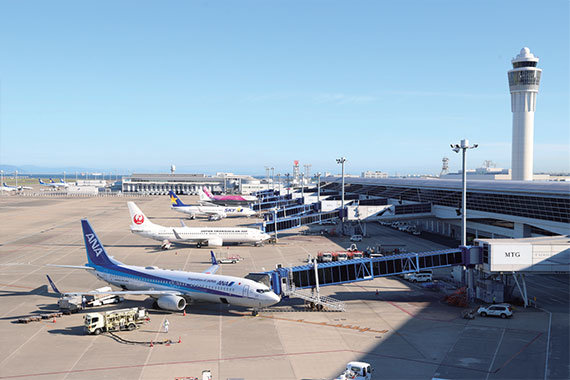
The IX system, audio-video IP intercom, and the NLX system *1, IP-based restroom call, centralized 135 call locations to the Building Safety Control Center, improving uptime, simplifying maintenance, and streamlining visitor and restroom call handling at Chubu Centrair International Airport in Japan. *1: NLX system is designed for Japanese market.
The Chubu Centrair International Airport opened in 2005 and serves as the gateway to the central Japan region. With the goal of achieving 20 million annual passengers by 2030, the airport is actively working on "city development starting from the airport" to contribute to local growth and create a more attractive air travel hub.
The airport faced operational difficulties due to multiple call systems from past renovations, leading to complex management and increased workloads. To accommodate future growth in passenger numbers, it was essential to upgrade aging equipment and prepare for large-scale renovations with flexibility.
Existing devices and equipment were efficiently updated and consolidated to the IX and NLX system, resulting in reduced wiring and space requirements. The centralization of devices also enhanced usability. Network integration facilitated better maintenance and operations, establishing infrastructure capable of supporting future expansions.

The Chubu Centrair International Airport utilized the IX and NLX systems to respond to calls from a total of 135 locations centralized to the Building Safety Control Center (BSCC). The IX system is used for visitor calls and the NLX system is used for restroom calls.

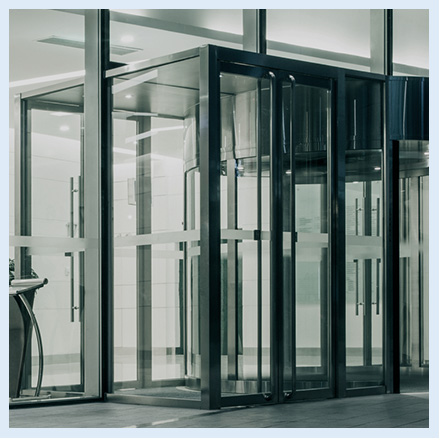
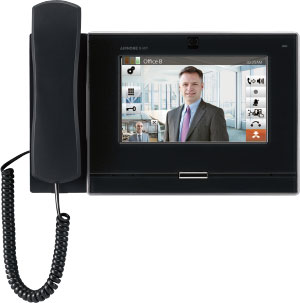
Airports are frequented daily not only by general travelers but also by numerous service providers. Effectively managing the access of these service providers is crucial to ensure safety and security. Previously at Chubu Centrair International Airport, visitor verification relied on security camera footage alone as the intercom was not equipped with video. After the update to the IX system, staff can use the intercom's monitor for real‑time video communication and remote unlocking of automatic doors, significantly improving operational efficiency. When a call button is pressed, the BSCC is notified; staff contact tenant companies for visitor verification and remotely unlock doors after confirmation.

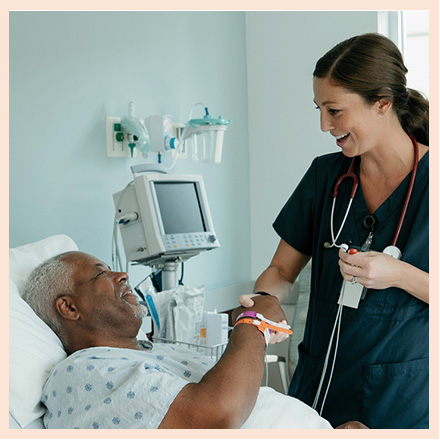
In Japan, it's common to find emergency call buttons inside public restroom stalls. These buttons are intended for use in situations where a user feels unwell or requires immediate assistance. Previously at Chubu Centrair International Airport, a large restroom call display system was installed. The compact NLX master station replaces it, reducing wiring and saving space. The names of the calling locations are displayed on the screen, allowing staff to instantly identify restroom locations. Two call buttons are installed inside accessible restrooms, and a custom-made box integrates the button and substation for improved visibility during emergencies and a neat appearance.

Reliable 24/7 communication and rapid fault detection are essential for airport operations. IP network intercoms provide constant supervision and rapid identification of cable disconnections and other problems, minimizing downtime even during emergencies. Migrating intercom trunk lines to an IP network and standardizing master units removed the complexity of mixed systems, simplified wiring to the BSCC, and reduced the number of master stations, which lowered costs and made maintenance easier.
Usability improved through large on‑screen location names and camera‑equipped master stations, eliminating the need for separate reference charts, reducing wrong‑button presses, and allowing visitor identity to be confirmed from a single terminal. Clear procedures and staff training further smoothed coordination between operations and repair teams. The scalable IP architecture supports future renovations and staffing changes while keeping safety and ease of use as priorities.
By consolidating visitor and restroom calls onto an IP network with IX and NLX systems, Chubu Centrair achieved a reliable, maintainable, and user‑friendly communication infrastructure that supports current operations and future growth.
Here are brief comments from staff involved in daily operation and maintenance, explaining why the IP network approach was chosen and the practical benefits it delivered.
Mr. Kondo and Mr. Hashimoto from Centrair Technical Connect Co. Ltd.,
Mr. Yamauchi, Mr. Shibagaki, and Mr. Tanaka from ZENNIKKEI Co., Ltd.
Mr. Hashimoto: Our Terminal Maintenance Group 2 is primarily responsible for the maintenance, repair, and renewal of facilities.
Mr. Yamauchi: Since before the airport opened, ZENNIKKEI has been consistently responsible for security operations. At the time of opening, when the airport was overflowing with users, security management was a continuous process of trial and error.
Mr. Kondo: Airport facilities must be flexible enough to accommodate growing numbers of users. In addition, various professionals work in airports, and they utilize the facilities. We strive to listen carefully to these staff members and consider their feedback when selecting equipment.
Mr. Hashimoto: Airports require accurate information delivery to customers 24/7. The more critical the equipment, the greater the need for stable connections and systems to minimize downtime even in emergencies. Of course, maintainability, repair processes, and emergency response systems are also crucial factors.
Mr. Kondo: We also emphasize staff training for handling issues. Facility management and repair are handled by separate teams, so it is important to ensure the required actions are straightforward and easy to communicate to the repair team. This simplicity is another key factor.
Mr. Hashimoto: Aiphone's IP network intercoms were initially implemented in newly constructed areas to handle calls from accessible restrooms and entrances. Due to their proven functionality, these intercoms were adopted for the recent update in Terminal 1, Building 1, and other areas, integrating the systems into one unified network.
Mr. Kondo: With this update, we eliminated the complexity caused by mixed systems and migrated all the intercom trunk lines in the main areas to an IP network. This system was chosen for its flexibility in accommodating changes in equipment due to renovations. Thanks to its robust scalability, future facility upgrades can also be carried out with ease. We consider the establishment of this infrastructure, oriented toward future needs, to be the most significant achievement of this project.
Mr. Hashimoto: The airport has many accessible restrooms, and previously, a large number of metal cables were drawn into the rear of the Building Safety Control Center (hereafter BSCC) to handle call signals. By switching to an IP network system, wiring has been simplified, and maintenance has become much easier. Furthermore, with constant supervision for issues like cable disconnections now possible via the intercom master unit at the BSCC, this has proven to be a major advantage.
Additionally, separate master units were previously installed for each system, which led to a problem of excessive master units. By standardizing the configuration with the current model, the number of master units was reduced. This not only brought cost savings but also improved operational efficiency, delivering overall satisfaction with the outcome.
Mr. Tanaka: Previously, restroom call master stations had small call buttons arranged for each accessible restroom. Staff used quick reference charts to compare the call information and give instructions to patrolling personnel.
Mr. Yamauchi: The large number of call buttons often led to pressing the wrong button accidentally.
Mr. Shibagaki: The new master station displays the name of the calling location clearly on the screen, eliminating the need for quick reference charts. It also removes the need for detailed button operations, reducing human errors and providing peace of mind. Additionally, it is easier for senior staff to use.
Mr. Tanaka: The intercom installed at service entrances in Buildings is primarily used to handle entry registrations from external personnel who do not carry employee IDs. Previously, visitor confirmation required switching to security camera footage. With the camera-equipped intercoms, personnel can complete the process entirely on one terminal, streamlining operations.
Mr. Shibagaki: The camera captures the visitor's face directly from the front, making it easier to confirm the identity of the individual.
Mr. Kondo: When considering equipment installation and upgrades, "safety and ease of use for everyone" are critical functionalities. Given the impact of population decline, it is expected that the number of staff working at airports will decrease in the future. While ensuring safety, we also aim to support operational streamlining as part of future developments.
Interviewed in June 2025
Founded in 1948, Aiphone is an industry pioneer providing communication systems solutions to clients across the globe. With a strong presence in Asia (including Hong Kong, Indonesia), Australia, North America, and Europe (including the United Kingdom), Aiphone serves businesses across several sectors. Such experience has manifested in the versatile range of intercom solutions that can seamlessly integrate into various settings, such as apartment complexes, detached housing, and office buildings. Possessing over 70 years of industry expertise and over 30 standard communication system offerings, Aiphone services guarantee its customers' safety, security, and comfort.
Click here to learn more about the IX Series and its wide range of business applications. For inquiries, please contact our inquiry desk, which you can access here.