Accurately Monitor Customer Situations Using Dual Cameras
By combining video feeds from both the intercom camera and the surveillance camera, staff can clearly observe customers' faces and actions. This enables smooth, precise guidance - for example, confirming where a customer is looking while providing directions to the fare adjustment machine - offering reassurance and enhancing customer confidence.


Smooth Communication through Written Conversation, Sign Language, and Gestures
Staff can assist customers remotely via the monitor, using maps or drawings, alongside written conversation, sign language, or gestures. Furthermore, barrier-free support is enhanced by integrating call buttons with Braille labels.
Respond to Emergency Calls and Detect Prolonged Stays in Individual Stalls
Remote response to emergency calls from restrooms is possible via intercom at the remote staffed control station. Sensors detect abnormalities such as customers fainting without pressing the call button or staying too long in a stall, enabling staff to initiate voice communication and check the situation.


Centralized management can be achieved across many stations without any limitations on wiring distances. Additionally, the serverless design saves space, simplifies installation, and reduces costs. Its straightforward configuration allows for easy system expansion, especially when transitioning staffed stations to unstaffed operation.


Customer inquiries can be handled and paging announcements made remotely from a staffed station. Broadcast messages to all unstaffed stations simultaneously or target specific stations individually as required.
The intercom's video feed can be monitored and recorded, just like standard monitoring cameras, enhancing overall station security.


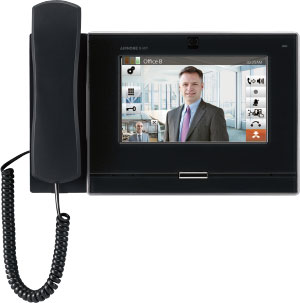
The IX System is an IP intercom system designed to supports customers using the station, enables smooth handling of emergency calls, and facilitates communication among station staff. The system can be configured without any wiring distance limitations and can also integrate with third-party network equipment. It broadly meets the needs for promoting unstaffed stations, reducing staff, and enhancing barrier-free accessibility.